Outdoor lighting can make entries easier to use, improve visibility on steps and walkways, support cameras, and extend the time a patio or deck feels comfortable. The best result comes from planning where light is needed before choosing fixtures.
For homes in Gaston County and the surrounding region, the plan also needs to account for weather exposure, mounting surfaces, wiring routes, switching, controls, and fixtures rated for the intended location.
Begin with the way each outdoor area is used
Walk the property after dark and identify where people enter, park, walk, gather, cook, or handle steps and grade changes. An entry door needs a different lighting approach from a long driveway, landscape bed, deck stair, or seating area.
Prioritize useful illumination instead of trying to make every area equally bright. Layering a few well-placed sources can provide better visibility and a calmer appearance than one very bright fixture.
- Front, side, and rear entry doors
- Walkways, steps, decks, and changes in elevation
- Driveways, parking areas, garages, and gates
- Patios, seating, grilling, and outdoor work areas
- Landscape features and architectural details
Choose the right type of light for the job
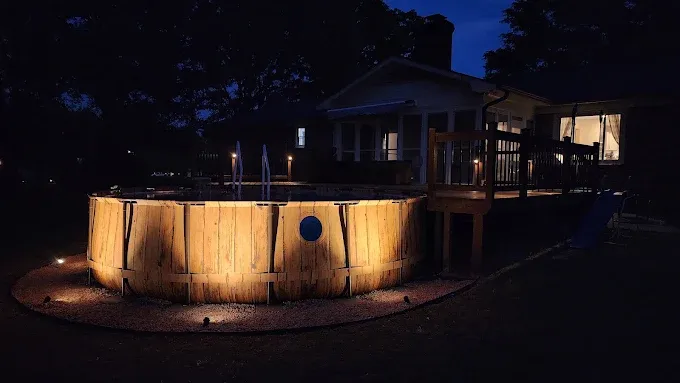
Wall-mounted fixtures can support entries and garages. Downlights and step lights can improve visibility while limiting glare. Landscape fixtures can define paths or highlight selected features, while security and motion-sensor lighting can respond to activity in specific zones.
Brightness, color temperature, beam direction, mounting height, and shielding all affect the finished result. Fixtures aimed carefully toward the intended surface are usually more useful than light that spills into windows, neighboring property, or the night sky.
Plan controls at the same time as fixtures
Outdoor lighting can be controlled by switches, timers, photocells, motion sensors, smart controls, or combinations of these devices. The right approach depends on whether the light is decorative, task-focused, security-related, or needed from dusk until a set time.
Discussing controls early helps determine wiring, device locations, zones, and whether separate groups of fixtures should operate independently.
Use fixtures and wiring suited to the location
Outdoor installations are exposed to moisture, temperature changes, physical damage, and landscaping activity. Fixtures, boxes, covers, cables, connections, and protection need to be appropriate for the specific damp, wet, underground, or exposed condition.
Existing outdoor wiring should be evaluated before new fixtures are added. A professional can also review circuit capacity, GFCI protection, mounting, cable routing, and the condition of devices already serving the area.
Residential outdoor-lighting installation near Bessemer City
Dulin’s Electrical installs outdoor, landscape, security, motion-sensor, and general residential lighting along with switches, dimmers, controls, and new wiring when required.
Homeowners across Gaston, Mecklenburg, Lincoln, Cleveland, Cabarrus, Iredell, Rowan, and Catawba counties can share the property location, photos, approximate fixture count, and the areas they want to improve when requesting a quote.
Common questions
Frequently asked questions
Do outdoor lights need to be rated for wet locations?
The required rating depends on where the fixture is installed and how it is exposed. Fixtures and related electrical components should be selected for the actual damp, wet, underground, or protected location.
Can outdoor lights be placed on motion sensors or timers?
Yes. Motion sensors, timers, photocells, switches, and compatible smart controls can be considered based on how each lighting zone should operate.
Can Dulin’s Electrical add wiring for new outdoor lights?
Yes. Outdoor and landscape lighting, security lighting, motion-sensor fixtures, controls, and related new wiring are included in the residential lighting services.
This article provides general homeowner information, not an electrical diagnosis. Conditions vary by property. For active smoke, fire, arcing, or an immediate threat, leave the area and contact emergency services or the utility as appropriate.